
A Case for the S5 Electronics K-12M Tube Amp Kit
Mark Houston 


S5 Electronics K-12M Tube Amplifier Kit
I have been building amplifiers since I was fourteen. Converting valve radios to guitar amps with home made speaker boxes brought me more than a little pocket money as a kid. Born in 1952 I cut my teeth on glass. Over the years I have built quite a number of speaker systems and transistor amps - some for instrument amplification some for audio amps. I sat beside someone (Rex) who was reading Audio Express about two years ago and from there got interested once more in valve amps.
S5 Electronics in the US sell a very simple valve amp kit based around some small valves and a very good circuit board (PCB). See the S5 Electronics Tube Amplifier Kit page for more kits and details where these simple tube amplifier kits can be purchased. I ordered my first kit (K-12M version with 11MS8 vacuum tubes) and before it had landed in Australia I had Sprague coupling caps, Hammonds OPTs and a custom wound GO steel power transformer on the way.
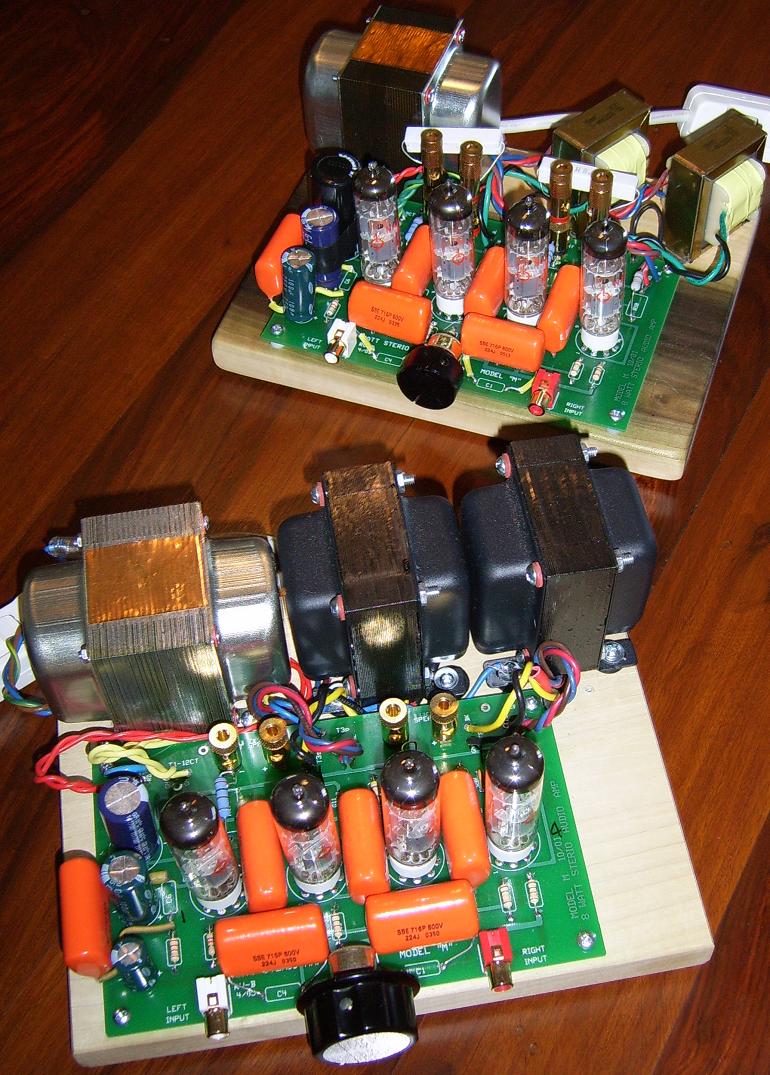
Photograph 1: S5 Electronics K-12M Tube Amplifier Kits on Pine Boards
Case for K-12M Tube Amplifier Kit
I have built three kits to date and the one here I mounted in a case. To get the valves to poke through the top I mounted the components on the under side of the PCB. The case is actually upside-down. The lid becomes the base (complete with air vents). In this kit the OPTs (standard) and main PCB are rubber grommet mounted. This PCB is completely snubbed. Dozens of tiny little caps invade the entire landscape sucking and savaging any little oscillation, buzz, hum or resonance to produce a beautifully quiet excellent sounding valve amp. I increased the PS caps by a factor of 2.5 and swapped the bigger caps for expensive low ESR types. The amp produces an excellent black background. This (and my other K-12s) all deliver a very passionate performance.
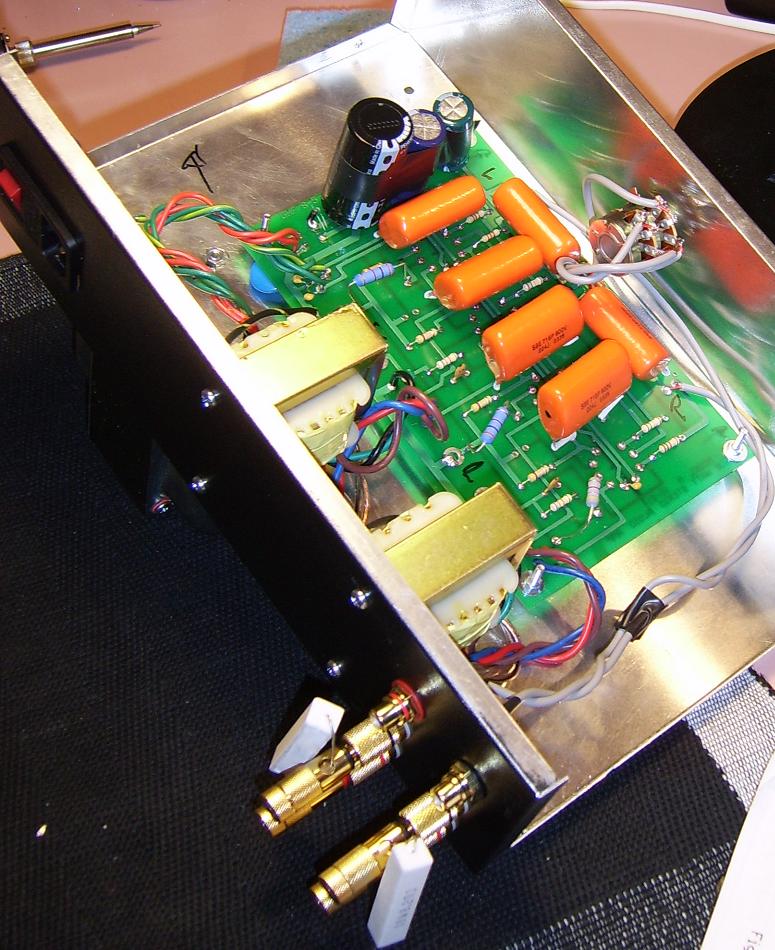
Photograph 2: S5 Electroncis K-12M Tube Amp Kit Construction
The case has five coats of high temperature exhaust paint. The last two coats are baked on in a very hot oven. Then two coats of hard lacquer with a spray can put a tough surface on the unit. Gold plated RCA connectors are used on the rear with multi-core shielded wire used for the signal path. Heavy copper wire is used for the speaker outputs. Give this unit fifty hours of playing to settle-in these big Sprague caps (orange drops as seen in the images).
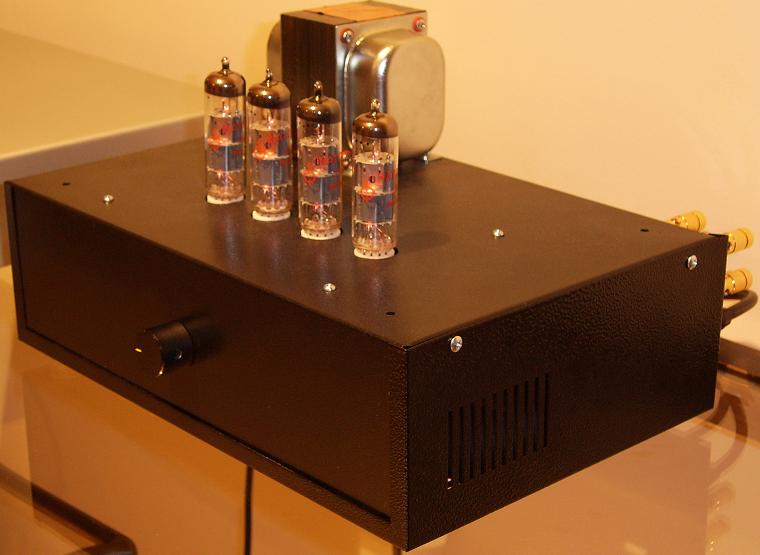
Photograph 3: Front View - Finished Tube Amp Case
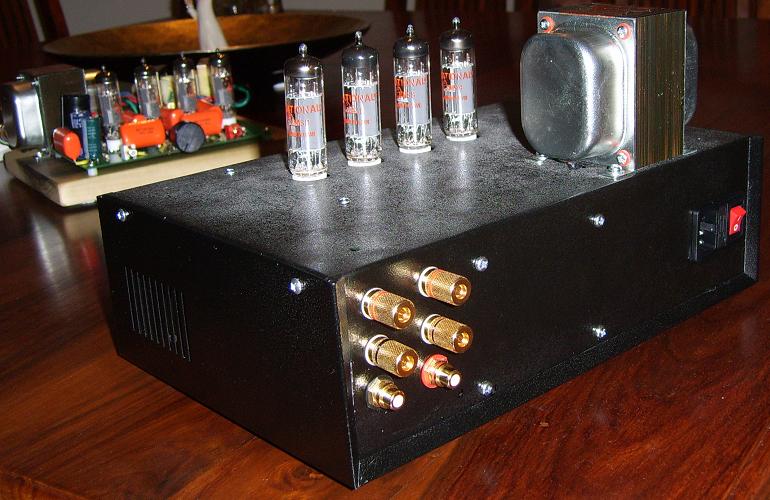
Photograph 4: K-12M Tube Amplifier Kit Enclosure
I would recommend the kit to anyone, but replace as much of the standard gear as you can with up-market produce, snub the hell out of the circuit, use valve rings, isolate (mechanically) the PCB and dampen any resonance where possible. It is a very rewarding project.
For more information on the various versions of these simple tube amplifier kits and a list of online retailers, see the S5 Electronics Tube Amplifier Kit summary page.